


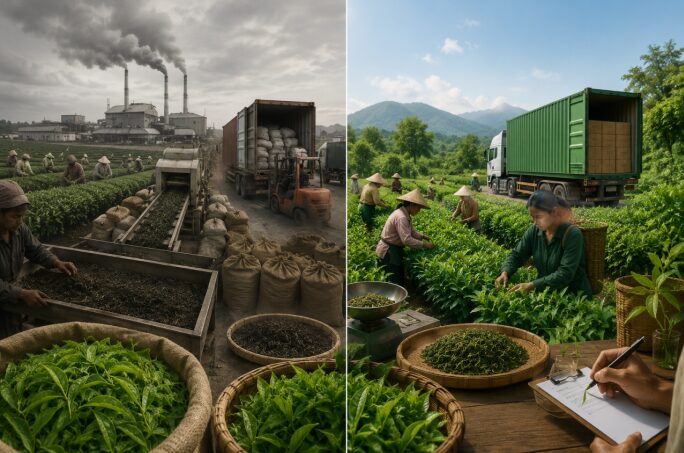
The bulk tea purchasing process requires careful consideration of its origin. Modern consumers have become extremely concerned about the transparency of sourcing. As a result, there are two dominant approaches to acquiring tea at the moment. One is the conventional commodity tea supply chain. The other is the authentic organic wholesale procurement chain.
Both have profound effects on the taste of your beverages, the state of the planet, and the economic situation of local communities. Learning the specific features of both operations is the first step towards making a well-informed choice of your supplier.
How Do Conventional Commodity Tea Supply Chains Work?
The main principle guiding the commodity tea chain of supply is maximising production and minimising expenses. In most cases, large corporations acquire bulk tea through centralised auctions. Moreover, buyers usually combine various leaf batches in order to achieve standardisation of their flavours. Thus, the exact origins of a commodity tea remain unknown to you as a buyer. Besides, you cannot trace back the identity of the workers cultivating the crop.
As far as agricultural practices go, they include heavy reliance on synthetic fertilisers and pesticides. Consequently, they deplete soil of essential microelements and sometimes pollute nearby watersheds. Besides, the constant pressure of minimising costs makes farmers pay insufficient wages to the hired labourers. Overall, life conditions in those communities tend to deteriorate.
Key Characteristics of Genuine Organic Wholesale Tea
In contrast, a true wholesale organic tea chain works on totally different principles. First of all, its cornerstone includes complete transparency and ecological awareness. That means that organic wholesalers establish cooperation relationships with particular farms and their unions. Hence, the source of each leaf batch becomes known to the wholesaler.
Farmers in organic cultivation do not utilise any synthetic chemicals. Instead, they resort to composting techniques and biodiversity management in order to ensure proper plant growth. Thus, the ecosystem surrounding the plantations does not suffer. Auditing procedures guarantee compliance with organic standards by the cultivators. Buying tea from a reputable organic wholesale supplier means supporting regenerative agricultural practices.
Comparison of Flavours, Ethical Standards, and Environmental Effects
Tasting commodity tea alongside organic varieties reveals the difference clearly enough. The former tastes quite bland since they are subjected to extensive mixing. In contrast, organic leaves preserve their unique terroirs, thus delivering a richer flavour. The same applies to the ethical side of things. Only certified organic suppliers adhere to the highest standards concerning labour practices. Thus, their employees earn fair money and work in a healthy environment.
Last but not least, the environmental effect differs greatly. Commodity farming leads to severe deforestation and water pollution of surrounding areas. On the contrary, organic cultivation contributes to ecological balance. Besides, it preserves fertile soils which continue producing for decades after the initial sowing.
Switch to Organic Wholesale Tea Today
Making a right choice of tea supplier can significantly improve the quality of your beverage. Commodity tea can be cheaper but cause damage to people and the environment. In turn, an organic wholesale supplier delivers superior quality and sustainability. Contact an organic supplier now in order to switch to organic tea procurement.